
 English
 Pусский
 한국어
한국어 हिन्दी
産業プロセスタワー
An industrial process tower is a tall, engineered structure used in manufacturing and chemical processing to support separation, reaction, purification, or heat-transfer operations. It is commonly found in plants that handle petroleum refining, gas treatment, petrochemicals, fertilizers, power generation, and other large-scale industrial activities. The tower is usually designed as a vertical vessel because gravity can be used to improve process efficiency, reduce pressure drop, and simplify the movement of liquids and vapors through the system.One of the most common functions of an industrial process tower is to separate components from a mixture. In distillation service, for example, a heated feed enters the tower and rises as vapor while heavier liquid components move downward. Inside the tower, trays or packing materials increase contact between the rising vapor and descending liquid, allowing substances with different boiling points to be separated. The lighter fractions are collected near the top, while heavier fractions are withdrawn from lower sections. This type of operation is essential in industries that require high-purity products or the recovery of valuable materials.Industrial process towers can also serve as absorption towers, stripping towers, cooling towers, or reaction towers. In absorption service, a liquid is introduced to capture specific gases from a vapor stream. In stripping service, unwanted components are removed from a liquid by contacting it with steam or gas. Cooling towers are used to reject heat from circulating water, helping control operating temperatures in large systems. In some cases, the tower may contain catalysts or other internals that support chemical reactions, making it an important part of continuous production.These structures are typically made from materials that can withstand corrosion, pressure, temperature changes, and mechanical stress. Common materials include carbon steel, stainless steel, and specialized alloys, depending on the substances being processed. Because industrial environments can be harsh, tower design must account for durability, safety, and long-term reliability. Engineers often include access platforms, ladders, piping connections, instrumentation, and maintenance openings to make inspection and operation easier.The height of an industrial process tower is determined by process requirements, flow rates, residence time, and the number of stages needed for separation or reaction. Taller towers often provide better performance but also require stronger foundations and careful structural design to resist wind, vibration, and seismic loads. Internal components such as trays, distributors, demisters, and support grids are selected to improve efficiency and reduce energy consumption.In modern plants, industrial process towers play a critical role in improving product quality, increasing yield, and reducing waste. Their design combines chemical engineering, mechanical engineering, and structural engineering to create systems that operate safely and efficiently. Although they may appear simple from the outside, these towers are highly specialized pieces of equipment that support many essential industrial processes.
製品
カテゴリー:
-
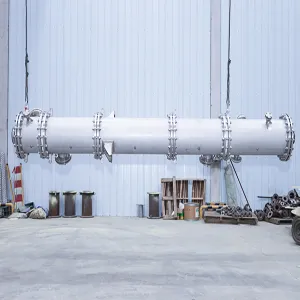
タワー
彼らの分類: PTFEライニング装置ビュー: 170番号:解放時間: 2026-06-08 09:20:30ステンレス鋼のタワーは、化学、石油化学、環境、電子化学産業にわたる分離、蒸留、吸収、化学反応プロセスに使用される重要な産業構造物です。高強度、耐食性、長寿命で知られるステンレス鋼のタワーは、厳しい条件下でも安定した効率的な動作を保証します。プロセス要件に応じて、構造化パッキン、トレイ、または PTFE 裏地付きシステムと組み合わせて、腐食環境での性能を向上させることができます。 Jiangsu Jiexin New Materials Co., Ltd. は、世界的なプロセス エンジニアリング アプリケーションにおいて、安全性、効率性、長期的な産業上の信頼性を目的に設計されたカスタマイズされたステンレス鋼タワー ソリューションを提供しています。
ニュース
カテゴリー:
検索結果はありません!
ケース
カテゴリー:
検索結果はありません!
ビデオ
カテゴリー:
検索結果はありません!
ダウンロード
カテゴリー:
検索結果はありません!
採用
カテゴリー:
検索結果はありません!
おすすめ商品
検索結果はありません!



 ワッツアップ
 電話
電話