
 English
 Pусский
 한국어
한국어 हिन्दी
化学プロセス制御バルブ
A chemical process control valve is a critical component used in industrial automation systems to regulate the flow, pressure, temperature, or level of process fluids in chemical plants. It is designed to provide precise and reliable control under demanding operating conditions, where corrosive media, high pressure, extreme temperatures, and continuous operation are common challenges. By adjusting the opening of the valve in response to control signals from a process control system, it helps maintain stable production conditions and ensures product quality, safety, and efficiency.In a chemical processing environment, control valves are often installed in pipelines that handle liquids, gases, steam, or slurries. Their main function is to modulate flow rather than simply start or stop it. Unlike standard shutoff valves, a control valve can open or close gradually, allowing the process system to respond smoothly to changes in demand or operating conditions. This modulation is essential for maintaining accurate control of process variables such as flow rate, pressure, and chemical concentration.A typical chemical process control valve consists of several key parts, including the body, bonnet, trim, actuator, and positioner. The valve body contains the flow passage and connects to the piping system. The trim includes internal components such as the plug, seat, and stem, which directly affect flow characteristics. The actuator provides the mechanical force needed to move the valve, and it may be pneumatic, electric, or hydraulic depending on application requirements. A positioner is often used to improve accuracy by ensuring the valve reaches the correct position based on the control signal.Material selection is extremely important for chemical service. Since many chemical fluids are aggressive or abrasive, control valves are commonly made from stainless steel, alloy steel, or other corrosion-resistant materials. In some applications, special linings, seals, or coatings are required to prevent chemical attack and extend service life. The valve design must also consider factors such as cavitation, flashing, noise, and erosion, which can reduce performance and damage internal parts over time.Chemical process control valves are widely used in reactors, distillation columns, mixing systems, heat exchangers, and utility lines. They play a vital role in maintaining process stability and protecting equipment from unsafe operating conditions. For example, if pressure becomes too high, the valve can reduce flow to help restore normal conditions. If temperature control is needed, the valve may regulate the flow of steam or cooling medium.Overall, a chemical process control valve is an essential tool for achieving accurate process regulation in chemical industries. Its ability to handle harsh environments while providing dependable and precise control makes it indispensable in modern process plants.
製品
カテゴリー:
-
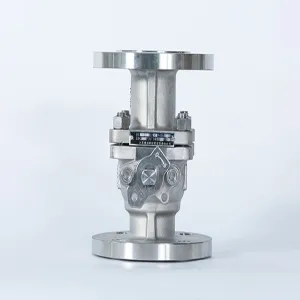
腐食性化学および産業システム用の PTFE ライニングボールバルブ
彼らの分類: PTFE 継手およびバルブビュー: 178番号:解放時間: 2026-06-08 13:55:35PTFE ライニングボールバルブは、化学、製薬、半導体、および工業用処理システムにおける腐食性流体を制御するための信頼できるソリューションです。金属バルブ本体の機械的強度と PTFE ライニングの優れた耐薬品性を組み合わせることで、優れたシール性能、長寿命、酸、アルカリ、強力な溶剤に対する耐性を実現します。このバルブは高温で厳しい動作条件に適しており、メンテナンスコストの削減とシステムの安全性の向上に役立ちます。化学物質の移送、高純度流体の取り扱い、およびプロセス制御の用途で広く使用されている PTFE ライニングボールバルブは、効率的で安定した耐腐食性のフロー管理を保証します。
ニュース
カテゴリー:
検索結果はありません!
ケース
カテゴリー:
検索結果はありません!
ビデオ
カテゴリー:
検索結果はありません!
ダウンロード
カテゴリー:
検索結果はありません!
採用
カテゴリー:
検索結果はありません!
おすすめ商品
検索結果はありません!



 ワッツアップ
 電話
電話