
Selecting the right PTFE equipment for industrial applications is a critical decision for manufacturers,
process engineers, procurement teams, and plant operators who need reliable performance in demanding environments.
PTFE, also known as polytetrafluoroethylene, is widely valued for its exceptional chemical resistance,
non-stick surface, low friction coefficient, high temperature tolerance, and excellent dielectric properties.
These features make industrial PTFE equipment a preferred solution in chemical processing, pharmaceuticals,
food and beverage, semiconductor manufacturing, water treatment, laboratory systems, and other corrosive or high-purity
environments.
However, choosing suitable PTFE components or PTFE process equipment is not as simple as selecting
a material label. Industrial scenarios differ significantly in terms of temperature, pressure, chemical exposure, mechanical
stress, purity requirements, and installation conditions. The best PTFE solution depends on matching the product type,
structural design, thickness, reinforcement method, dimensional specifications, and operating limits to the actual process
environment. This guide provides a practical, SEO-friendly overview of how to select suitable PTFE equipment for industrial-scenario applications,
including definitions, core advantages, selection criteria, specification tables, and application guidance.
PTFE equipment refers to industrial products, components, linings, seals, piping parts, membranes,
gaskets, hoses, valves, and fabricated parts made fully or partially from PTFE material. In many industrial settings,
PTFE is used either as a standalone material or as a lining, coating, or sealing layer combined with metal, elastomer,
glass, or composite structures.
The purpose of PTFE equipment is to improve corrosion resistance, reduce contamination, prevent sticking or fouling,
and extend service life in challenging operating environments. Depending on the application, PTFE products may be
manufactured through molding, skiving, machining, extrusion, welding, or reinforcement techniques. In industrial
scenarios, selecting the correct PTFE equipment requires understanding both material properties and system-level
compatibility.
PTFE has become one of the most important engineering polymers in industrial design because it performs reliably
in conditions where many other plastics, rubbers, and metals degrade quickly. Its molecular structure gives it a
unique combination of properties that are especially useful in chemically aggressive or high-cleanliness processes.
There are many forms of PTFE industrial equipment, and each type is suited to different process conditions.
Selecting the correct product form is one of the most important parts of the procurement and engineering process.
| PTFE Equipment Type | Typical Function | Common Industrial Applications |
|---|---|---|
| PTFE Pipe and Tubing | Transport corrosive fluids or high-purity liquids | Chemical transfer, laboratory lines, pharmaceutical systems |
| PTFE Lined Pipe | Protect metal piping from corrosive media | Acid transfer, solvent lines, process piping |
| PTFE Gaskets | Create chemical-resistant seals | Flanged joints, reactors, pumps, valves |
| PTFE Seals and O-rings | Provide dynamic or static sealing performance | Pumps, mixers, valves, instrumentation |
| PTFE Sheets and Films | Offer insulating, lining, or barrier surfaces | Equipment lining, insulation, fabrication parts |
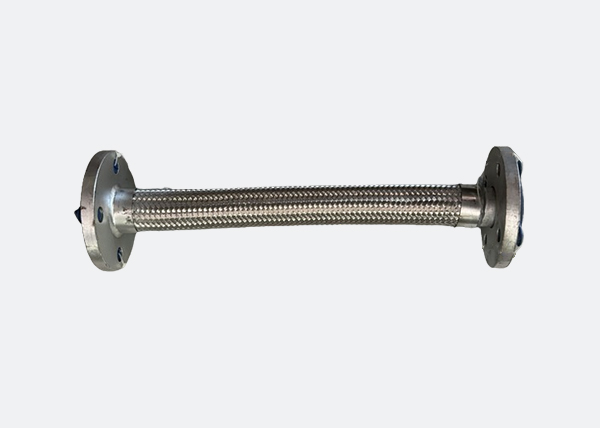
| PTFE Hoses | Flexible transport of corrosive or sensitive media | Fluid transfer, cleaning systems, analytical equipment |
| PTFE Valve Components | Enhance corrosion resistance and sealing | Control valves, diaphragm valves, isolation systems |
| PTFE Bellows and Expansion Parts | Absorb vibration and thermal movement | Corrosive pipelines, vibration isolation |
| PTFE Machined Parts | Custom fit for specialized equipment | Semiconductor, instrumentation, OEM assemblies |
| PTFE Membranes | Enable filtration or venting functions | Filtration systems, venting, protective membranes |
To choose the right PTFE equipment for industrial-scenario applications, it is necessary to evaluate
the full operating environment. The best material on paper may still fail if the product design or specification does
not match the actual process.
Chemical compatibility is usually the first factor to check. PTFE is broadly resistant to many industrial chemicals,
but not every grade, filler, or reinforced formulation behaves identically in every medium. It is important to
identify the exact fluid, concentration, temperature, and exposure time. For example, strong oxidizers, certain
molten alkali metals, and specific highly reactive compounds may require additional verification before PTFE use.
When selecting PTFE equipment, review:
Temperature has a major effect on PTFE performance. PTFE is known for excellent thermal stability relative to many
polymers, but the exact working temperature should always be matched to the product form, load conditions, and
process duration. Continuous exposure near the upper limit may reduce mechanical strength or sealing reliability.
For thermal cycling systems, consider expansion, contraction, and stress accumulation.
Industrial PTFE equipment must withstand system pressure, assembly force, vibration, and mechanical wear.
Pure PTFE can creep under load, especially at elevated temperatures, so reinforced PTFE or metal-backed designs
may be required in high-pressure or structurally demanding applications. For seals and gaskets, compressive load
retention is especially important.
In pharmaceutical, food-grade, semiconductor, and laboratory environments, purity is a major selection criterion.
PTFE equipment should be evaluated for extractables, leachables, surface finish, particle generation, and cleaning
compatibility. Smooth surfaces, controlled manufacturing processes, and documented material quality are important
when contamination risk must be minimized.
PTFE equipment must fit correctly with mating parts, whether the component is a gasket, liner, valve seat, hose
assembly, or machined custom part. Tolerance issues can cause leakage, sealing failure, or uneven stress distribution.
For custom parts, dimensional drawings, machining tolerances, and installation constraints should be reviewed before
purchase or fabrication.
PTFE selection differs significantly between static and dynamic conditions. Static seals and linings focus on chemical
resistance and compression stability, while dynamic applications require lower friction, wear resistance, and shape
retention. If the equipment will face movement, rotation, repeated flexing, or reciprocating action, a reinforced
or modified PTFE design may be more suitable.
Installation conditions often determine whether a PTFE product performs as intended. Consider accessibility, flange
design, thermal expansion allowance, vibration levels, cleanliness during installation, and maintenance frequency.
A product that is technically suitable may still be impractical if it is difficult to install or inspect.
Different industrial scenarios demand different PTFE equipment configurations. The table below summarizes common
selection priorities for major application categories.
| Industrial Scenario | Primary PTFE Selection Priority | Recommended Equipment Form |
|---|---|---|
| Chemical processing | Corrosion resistance, pressure tolerance, temperature stability | Lined pipes, gaskets, hoses, valve parts |
| Pharmaceutical production | Purity, low extractables, cleanability | PTFE tubing, seals, membranes, custom parts |
| Food and beverage | Non-stick behavior, hygienic surfaces, regulatory compatibility | Gaskets, hoses, sheets, process liners |
| Semiconductor manufacturing | Ultra-high purity, chemical compatibility, low particle release | Machined parts, tubing, valves, membranes |
| Water treatment | Resistance to chemicals, scale, and moisture | Pipe liners, seals, valve components |
| Laboratory systems | Precision fit, chemical resistance, low contamination | Tubing, fittings, sheets, custom machined parts |
| High-temperature equipment | Thermal stability and dimensional retention | Reinforced PTFE, gaskets, liners |
| Rotating machinery | Low friction and wear resistance | Seals, bushings, bearings, modified PTFE parts |
Not all PTFE equipment is made from the same formulation. Depending on the application, users may choose virgin PTFE,
filled PTFE, reinforced PTFE, expanded PTFE, or modified PTFE. Each variant offers different tradeoffs in strength,
friction, wear resistance, and sealing behavior.
| PTFE Type | Main Characteristics | Typical Use |
|---|---|---|
| Virgin PTFE | High purity, excellent chemical resistance, low friction | Clean applications, linings, seals, laboratory parts |
| Filled PTFE | Improved wear resistance, reduced creep, enhanced strength | Bearings, seals, valve seats, dynamic parts |
| Reinforced PTFE | Better mechanical stability and load-bearing capacity | Industrial linings, structural parts, high-load assemblies |
| Expanded PTFE (ePTFE) | Compressible, flexible, excellent sealing properties | Gaskets, sealing tapes, membrane products |
| Modified PTFE | Tailored properties for specific performance needs | Specialized industrial equipment and precision parts |
When evaluating PTFE equipment for industrial use, specification sheets should be reviewed carefully. The most
important performance properties are listed below.
| Property | Why It Matters | Selection Guidance |
|---|---|---|
| Chemical resistance | Determines compatibility with process media | Always match against actual chemicals, concentration, and temperature |
| Temperature range | Affects durability and service life | Select with margin above normal operating temperature |
| Tensile strength | Indicates resistance to pulling or structural stress | Important for tubing, liners, and custom parts |
| Compressive strength | Influences gasket and seal performance | Important in bolted joints and high-load sealing |
| Friction coefficient | Impacts wear and movement | Critical for dynamic parts and sliding components |
| Dielectric strength | Important in electrical insulation | Relevant for electronics and cable protection |
| Surface finish | Influences cleanability and contamination | Use smoother surfaces for purity-critical systems |
| Creep resistance | Affects long-term shape retention under load | Use reinforced or filled PTFE where needed |
A structured selection process helps reduce procurement errors and improves equipment performance. The following
step-by-step method can be used for most industrial PTFE selection projects.
Define the process media: Identify all chemicals, solvents, gases, liquids, and cleaning agents that
the PTFE equipment will contact.
Determine temperature and pressure: Record normal, peak, startup, shutdown, and emergency conditions.
Clarify the application type: Decide whether the equipment will function as a seal, lining, hose,
valve part, pipe, membrane, or custom part.
Assess purity requirements: Establish whether the system requires food-grade, pharmaceutical-grade,
semiconductor-grade, or general industrial performance.
Evaluate mechanical stress: Consider vibration, compression, abrasion, flexing, and pressure cycling.
Check compatibility with mating parts: Review flange materials, bolt load, metal expansion, and
installation geometry.
Select the proper PTFE grade: Choose virgin, filled, reinforced, expanded, or modified PTFE based
on performance needs.
Review dimensional tolerances: Confirm sizes, thickness, lengths, diameters, and tolerances.
Verify maintenance expectations: Consider cleaning cycles, replacement intervals, and inspection access.
Request documentation: Ask for material specifications, performance data, and testing records when needed.
The following is a general reference table for typical PTFE equipment specifications. Actual values vary by product
design, grade, reinforcement, processing method, and manufacturer standards.
| Specification Item | General PTFE Range / Description | Industrial Relevance |
|---|---|---|
| Material | Virgin PTFE, filled PTFE, reinforced PTFE, expanded PTFE | Defines performance and application suitability |
| Temperature resistance | Suitable for a broad service temperature range | Important for thermal process systems |
| Chemical resistance | Excellent against most acids, bases, and solvents | Core reason for industrial adoption |
| Friction coefficient | Very low compared with most engineering plastics | Useful for sliding and dynamic applications |
| Electrical insulation | High dielectric strength | Suitable for electrical and electronic systems |
| Moisture absorption | Very low | Improves dimensional stability in wet environments |
| Surface finish | Can be produced in smooth or machined finishes | Relevant for cleanability and sealing |
| Fabrication methods | Molding, machining, skiving, extrusion, welding, reinforcement | Affects geometry and final performance |
Even though PTFE is a highly versatile material, equipment selection errors can still cause leakage, wear, process
contamination, and unexpected downtime. Common mistakes include:
A practical way to select PTFE equipment is to match the product form to the functional need. The table below gives
a simple function-based overview.
| Functional Need | Best PTFE Equipment Type | Selection Note |
|---|---|---|
| Sealing | PTFE gaskets, expanded PTFE seals, O-rings | Focus on compression recovery and chemical resistance |
| Fluid transfer | PTFE hoses, PTFE tubing, lined pipes | Check pressure rating, bend radius, and chemical exposure |
| Corrosion protection | PTFE liners, sheets, coatings | Evaluate adhesion, thickness, and process compatibility |
| Wear reduction | Filled PTFE bushings, bearings, sliding parts | Use modified formulations for dynamic loads |
| High purity processing | Virgin PTFE tubing, machined parts, membranes | Prioritize low extractables and clean surfaces |
| Electrical insulation | PTFE sheets, wires, insulation components | Check dielectric strength and thermal stability |
Quality evaluation is essential in industrial procurement. Even if the product type is correct, poor manufacturing
quality can reduce performance. When reviewing PTFE equipment, ask whether the material and fabrication process
are consistent and suitable for the application.
PTFE is often selected because it outperforms many common alternatives in chemically aggressive environments.
The comparison below highlights typical industrial differences.
| Material | Strengths | Limitations Compared with PTFE |
|---|---|---|
| PTFE | Excellent chemical resistance, low friction, wide applicability | Can creep under load if not properly designed |
| Rubber | Flexible, cost-effective, good sealing in some cases | Lower chemical and thermal resistance |
| PVC | Affordable, easy to process | Limited high-temperature and chemical performance |
| Metal | Strong, pressure-resistant, durable | May corrode, weigh more, and require protective lining |
| PEEK | High mechanical strength, high-temperature capability | Usually higher cost and different chemical profile |
PTFE equipment is widely used across industrial systems where reliability, purity, and chemical resistance are
essential. Typical application examples include:
For content planning, directory pages, or industry landing pages, the following keyword themes are commonly used
around this topic:
Choosing suitable PTFE equipment for industrial-scenario applications requires a careful balance of
chemical compatibility, temperature resistance, mechanical strength, purity, and dimensional fit. PTFE is a highly
versatile industrial material, but the best results come from matching the correct product form and grade to the
exact process conditions. Whether the application involves sealing, fluid transfer, corrosion protection, or
contamination control, the selection process should always begin with a detailed analysis of the operating
environment and performance requirements.
By understanding PTFE material types, key specifications, common application scenarios, and quality evaluation
criteria, engineers and procurement teams can make more informed decisions and improve equipment reliability.
For industrial users seeking durable, low-maintenance, and chemically resistant solutions, PTFE remains one of the
most important materials in modern process engineering.
著作権 © 2023 江蘇解放新材料有限公司 サイトマップ
この Web サイトでは、お客様に最高のエクスペリエンスを提供するために Cookie を使用しています。

 English
 Pусский
 한국어
한국어 हिन्दी



 ワッツアップ
 電話
電話
コメント
(0)