
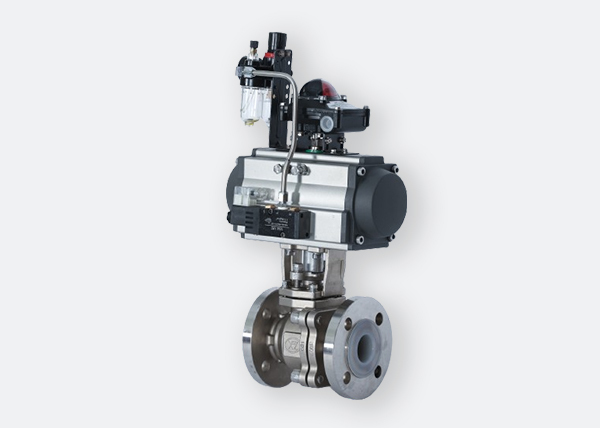
How to Judge Whether PTFE Equipment Meets Standards
PTFE equipment is widely used in chemical processing, pharmaceuticals, semiconductor manufacturing, food handling,
laboratory systems, and other demanding industrial environments because of its excellent chemical resistance,
high temperature stability, low friction, and non-stick surface properties. However, not all PTFE equipment is
manufactured to the same quality level. If you need to know how to judge whether PTFE equipment meets standards,
you must evaluate its material composition, dimensional accuracy, thermal resistance, chemical compatibility,
mechanical strength, surface quality, and compliance with relevant industry specifications.
This guide provides a clear, SEO-friendly overview of PTFE equipment standards, inspection methods, technical
requirements, and quality judgment principles. It is designed for use in blog posts, category pages, product
resource pages, and industrial knowledge articles. The content focuses on general industry information only and
does not include any specific company recommendations.
PTFE stands for polytetrafluoroethylene, a fluoropolymer known for its exceptional resistance to
chemicals, heat, and wear. PTFE equipment refers to industrial components, linings, tubes, pipes, seals, gaskets,
sheets, rods, valves, fittings, membranes, and custom parts made from or lined with PTFE material. Because PTFE is
highly inert and performs well in aggressive environments, it is commonly used where corrosion resistance and
clean operation are critical.
Typical PTFE equipment includes PTFE lined pipes, PTFE sheets, PTFE tubes, PTFE gaskets, PTFE bushings, PTFE
valve seats, PTFE flexible hoses, and PTFE machined parts. Each type of equipment has different technical
requirements, but the general standards for judging quality are similar.
Judging whether PTFE equipment meets standards is essential for safety, performance, and long service life. Poor
quality PTFE products may crack, deform, leak, contaminate media, or fail under pressure and temperature. In
industries such as chemical transfer, high-purity processing, and corrosive fluid handling, even small defects can
lead to process interruption, product contamination, maintenance costs, or safety risks.
A qualified PTFE product should offer:
Stable chemical resistance in aggressive media
Reliable performance at high and low temperatures
Consistent dimensions and tight tolerances
Low friction and smooth surface quality
Mechanical stability under load and pressure
Compliance with applicable material and process standards
To determine whether PTFE equipment meets standards, buyers, engineers, and inspectors should evaluate the following
core criteria. These are the most important indicators of quality and compliance in the PTFE equipment market.
The first step is to verify the PTFE material grade. High-quality PTFE equipment should be made from virgin PTFE or
a properly formulated PTFE compound, depending on the application. Virgin PTFE generally offers the best chemical
resistance and cleanliness. Recycled or low-grade raw materials may contain impurities that reduce performance.
Key checks include:
Material source and traceability
Virgin PTFE or filled PTFE identification
Presence of contaminants, discoloration, or foreign particles
Consistency of batch formulation
PTFE equipment must match design dimensions accurately to ensure proper installation and sealing. Dimensional
deviation can lead to leakage, poor fit, pressure loss, or equipment failure. Standard-compliant PTFE products should
be checked with calibrated measuring instruments such as calipers, micrometers, thickness gauges, and coordinate
measuring systems.
PTFE is valued for its smooth, low-friction surface. Equipment with scratches, pits, bubbles, cracks, warping, or
rough finishes may not meet standards. Surface defects can also affect sealing performance and chemical resistance.
In high-purity systems, surface cleanliness is especially important because rough surfaces may trap residues.
PTFE is known for excellent thermal stability. Standard PTFE equipment should maintain usable performance across a
wide temperature range, typically from cryogenic conditions to high service temperatures. However, actual limits
depend on the product design, wall thickness, pressure conditions, and whether fillers are used.
One of the main reasons users select PTFE equipment is its strong resistance to acids, alkalis, solvents, oxidizers,
and many corrosive chemicals. To judge whether PTFE equipment meets standards, the intended chemical environment
must be compared with the material compatibility profile. Even though PTFE is highly resistant, some operating
conditions may still require special design considerations.
PTFE is not known for high mechanical strength compared with some engineering plastics. Therefore, equipment design
must compensate for its relatively soft nature. Standards should verify that the product can handle the intended
pressure, compression, vibration, and installation stress without deformation or failure.
For pharmaceutical, food, semiconductor, and laboratory applications, cleanliness is a critical standard. PTFE
equipment should be free from oil, dust, metal fragments, mold release residue, or other contaminants. Any surface
treatment, cutting process, or packaging method should preserve cleanliness.
Different markets may use different standards and technical references for PTFE equipment. While requirements vary
by region and application, the following categories are commonly used in quality evaluation.
| Standard Category |
|---|
| What It Covers |
|---|
| Typical Use |
|---|
| Material Standards |
| PTFE resin purity, composition, and base performance |
| Raw material and molded products |
| Dimensional Standards |
| Size, tolerance, wall thickness, and fit |
| Pipes, tubes, sheets, machined parts |
| Performance Standards |
| Heat resistance, pressure resistance, wear resistance, elongation |
| Functional qualification testing |
| Surface Standards |
| Roughness, finish, defects, visual appearance |
| Sealing parts, clean systems |
| Testing Standards |
| Inspection methods and test procedures |
| Quality control and third-party verification |
| Industry-Specific Standards |
| Special requirements for chemical, food, medical, or semiconductor use |
| High-purity or regulated applications |
A practical quality judgment process usually includes visual inspection, dimensional measurement, performance testing,
and documentation review. The following steps help determine whether PTFE equipment meets standards.
Begin with the material certificate, technical datasheet, inspection report, and batch traceability documents. These
records should clearly identify the PTFE grade, production batch, key specifications, and applicable test results.
Documentation is one of the easiest ways to judge whether PTFE equipment meets standards before physical inspection.
Examine the surface, edges, color, shape, and general appearance. Look for cracks, burrs, bubbles, inclusions,
delamination, uneven thickness, and deformation. A standard PTFE product should have a consistent appearance and
clean finish suitable for its intended application.
Compare the actual dimensions with the drawing or product specification sheet. Measure inner diameter, outer
diameter, thickness, length, flange dimensions, and sealing surfaces if applicable. Products that exceed tolerance
limits should be rejected or reworked.
Depending on the equipment type, test tensile strength, elongation, compression resistance, creep resistance,
dielectric properties, or burst pressure. These tests help confirm whether the product can perform reliably in real
operating conditions.
Even if a PTFE product passes general inspection, it may still be unsuitable for a particular chemical process or
mechanical load. Standards must be judged in context. The product should match the operating temperature, chemical
exposure, pressure, installation method, and service life requirement.
The table below summarizes the most important technical properties used to evaluate PTFE equipment quality. Actual
values may vary depending on formulation, processing method, and product design.
| Property |
|---|
| General PTFE Characteristic |
|---|
| Why It Matters |
|---|
| Chemical Resistance |
| Excellent against most acids, bases, and solvents |
| Prevents corrosion and media contamination |
| Operating Temperature Range |
| Wide range with strong thermal stability |
| Supports hot and cold process conditions |
| Friction Coefficient |
| Very low |
| Improves flow, reduces wear, and helps anti-stick performance |
| Electrical Insulation |
| Excellent |
| Useful in electronic and dielectric applications |
| Water Absorption |
| Extremely low |
| Improves dimensional stability in humid environments |
| Mechanical Strength |
| Moderate to lower than many engineering plastics |
| Requires correct design and reinforcement if needed |
| Surface Finish |
| Smooth when properly processed |
| Affects sealing, cleanliness, and flow behavior |
When judging PTFE equipment, the following checklist can be used as a practical reference. This checklist is useful
for procurement teams, quality inspectors, and engineering users who need a fast but reliable assessment.
| Inspection Item |
|---|
| Pass Criteria |
|---|
| Common Failure Signs |
|---|
| Material Grade |
| Correct PTFE grade with traceable documentation |
| Unknown source, inconsistent labeling |
| Appearance |
| Uniform color, no visible defects |
| Cracks, bubbles, burn marks, dirt |
| Dimensions |
| Within stated tolerance range |
| Oversize, undersize, warping |
| Thickness |
| Even and consistent throughout |
| Thin spots, uneven walls |
| Surface Smoothness |
| Clean and low roughness |
| Scratches, pits, rough finish |
| Mechanical Integrity |
| No cracking, splitting, or deformation |
| Fracture, creep, collapse under load |
| Chemical Suitability |
| Compatible with intended medium |
| Swelling, discoloration, deterioration |
| Cleanliness |
| Free from contamination |
| Oil residue, dust, metal particles |
Different PTFE products are evaluated in different ways. The following overview explains the most common product
categories and the main points to inspect for each one.
| PTFE Equipment Type |
|---|
| Main Standard Concerns |
|---|
| Inspection Focus |
|---|
| PTFE Pipe and Tube |
| Wall thickness, pressure capacity, straightness |
| Leak resistance, uniformity, dimensional tolerance |
| PTFE Lined Pipe |
| Lining adhesion, lining thickness, flange sealing |
| Bonding quality, lining continuity, corrosion barrier integrity |
| PTFE Sheet |
| Thickness, flatness, surface finish |
| Warping, pinholes, edge defects |
| PTFE Gasket |
| Compression performance, cut accuracy |
| Seal quality, shape precision, elasticity |
| PTFE Valve Seat |
| Wear resistance, sealing stability, machining precision |
| Leak prevention and dimensional fit |
| PTFE Machined Part |
| Tolerance, surface quality, structural integrity |
| CNC accuracy, edge finish, crack-free structure |
| PTFE Hose |
| Flexibility, burst resistance, liner quality |
| Reinforcement quality, bending performance, safety margin |
The definition of “meets standards” depends on the end use. A PTFE component used in a lab may require high purity
and chemical resistance, while an industrial lining may require high pressure tolerance and strong structural
support. To judge compliance correctly, always match the product to the application.
In chemical processing, PTFE equipment should resist aggressive fluids, acids, and solvent exposure. Important
standards include lining integrity, pressure resistance, dimensional fit, and long-term corrosion protection.
For pharmaceutical systems, cleanliness, non-contamination, and traceability are essential. PTFE equipment should
be manufactured with controlled surface quality and validated cleaning procedures.
In food applications, PTFE must be suitable for contact with process materials and should not introduce unwanted
substances. The product should be smooth, easy to clean, and compliant with relevant food-contact requirements.
PTFE equipment used in semiconductor and electronic environments must offer ultra-clean performance, low particle
generation, and dimensional stability. Surface cleanliness and contamination control are especially important here.
Laboratory PTFE products must provide strong chemical resistance and precise fit. Tubing, containers, fittings, and
seals should be inspected carefully for purity and dimensional accuracy.
A non-compliant PTFE product often shows visible or measurable defects. Common warning signs include:
Uneven material color or embedded impurities
Cracks, bubbles, or voids inside the structure
Warping, shrinkage, or distortion after processing
Out-of-tolerance dimensions
Rough or scratched sealing surfaces
Poor bonding in PTFE lined systems
Low mechanical stability under pressure or heat
Missing test reports or unclear traceability
If one or more of these defects are present, the PTFE equipment should be re-inspected or rejected, depending on the
severity and application risk.
The following methods are commonly used to confirm whether PTFE equipment meets standards. These tests may be
performed in-house or by a third-party inspection laboratory.
| Test Method |
|---|
| Purpose |
|---|
| Applicable Products |
|---|
| Visual Inspection |
| Detect surface defects and manufacturing flaws |
| All PTFE equipment |
| Dimensional Measurement |
| Confirm tolerance and fit |
| Pipes, sheets, machined parts, gaskets |
| Tensile Test |
| Assess strength and elongation |
| Sheets, rods, molded parts |
| Compression Test |
| Measure deformation under load |
| Gaskets, seals, seats |
| Pressure Test |
| Check leak resistance and safety |
| Pipes, hoses, lined systems |
| Chemical Immersion Test |
| Verify compatibility with target media |
| All chemical-contact products |
| Surface Roughness Test |
| Measure finish quality |
| Sealing and high-purity parts |
| Cleanliness Test |
| Check particle and residue levels |
| Food, pharma, semiconductor applications |
The following table shows a general example of specification items commonly included in PTFE equipment datasheets.
The exact numbers depend on product design and application requirements.
| Specification Item |
|---|
| Typical Content |
|---|
| Material |
| Virgin PTFE or filled PTFE compound |
| Color |
| White, off-white, or application-specific |
| Operating Temperature |
| Wide service range depending on design |
| Chemical Resistance |
| Suitable for most corrosive media |
| Thickness Tolerance |
| Defined by drawing or technical standard |
| Surface Finish |
| Smooth, defect-free, application-specific roughness |
| Pressure Rating |
| Based on product type and reinforcement |
| Inspection Documents |
| Material certificate, test report, batch record |
Buyers should use a structured procurement checklist before placing an order. This helps avoid receiving PTFE
equipment that looks acceptable but fails in real service. A strong purchasing process should include drawing review,
sample approval, documentation verification, and acceptance criteria.
Confirm the exact PTFE product type and use case
Request technical drawings and dimensional tolerances
Ask for material certificates and test reports
Verify chemical compatibility with the intended media
Check whether pressure, temperature, and load requirements are clearly stated
Inspect samples before mass production or bulk acceptance
Define rejection criteria for surface defects and dimensional errors
Standards compliance is not only about initial appearance or first-use testing. Long-term reliability matters just as
much. PTFE equipment should be judged by its ability to retain shape, sealing integrity, and chemical resistance over
time. Creep, cold flow, thermal cycling, and repeated chemical exposure are important performance factors.
A reliable product should continue to perform within the expected range throughout its service life. If the equipment
rapidly deforms, leaks, or becomes brittle under normal use, it may not truly meet standard requirements even if it
passed a superficial inspection.
For content optimization, the following keyword phrases are naturally relevant to the topic of PTFE quality and
compliance. They can be integrated into headings, body text, meta descriptions, and FAQ sections:
PTFE equipment standards
how to judge PTFE equipment quality
PTFE product inspection
PTFE chemical resistance
PTFE dimensional tolerance
PTFE material purity
PTFE equipment testing
PTFE surface finish
PTFE compliance requirements
PTFE industrial applications
The most important factor is application suitability. Material grade, dimensional accuracy, chemical resistance,
and surface quality all matter, but the product must first fit the intended operating environment.
Yes. Some defects are internal or performance-related and may not be visible. That is why documentation review and
functional testing are essential.
Virgin PTFE is often preferred for high-purity and chemical-resistant applications, but filled PTFE may be better
for certain wear, load, or creep-resistance requirements.
Compare the process chemicals, concentration, temperature, and exposure duration with the material compatibility
data for the PTFE product. In demanding systems, immersion or service simulation testing may be necessary.
Typical documents include a material certificate, test report, specification sheet, batch number, and inspection
record. For regulated industries, additional validation documents may be required.
To judge whether PTFE equipment meets standards, you should combine documentation review, visual inspection,
dimensional measurement, technical testing, and application compatibility assessment. A qualified PTFE product
should have pure and consistent material quality, accurate dimensions, smooth surfaces, strong chemical resistance,
stable thermal performance, and reliable mechanical behavior.
In practical terms, the best way to evaluate PTFE equipment is to compare the product against its technical
specification, applicable standard, and real operating requirements. If the PTFE equipment passes all required
checks and performs consistently in service, it can be considered standard-compliant for its intended application.
```
著作権 © 2023 江蘇解放新材料有限公司 サイトマップ
この Web サイトでは、お客様に最高のエクスペリエンスを提供するために Cookie を使用しています。

 English
 Pусский
 한국어
한국어 हिन्दी



 ワッツアップ
 電話
電話
コメント
(0)